Nevada is known for many things, but agriculture, dairy, and ranching are usually not among the state’s accolades. However, alongside the flashing lights of the Las Vegas Strip, the professional sports teams, the legendary aliens at Area 51 and the vast desert expanses of land, there exists a thriving agricultural industry and other economic contributors grown in Nevada.
In the face of seemingly insurmountable challenges, Nevada has created an economic sector that, while often overlooked, has proven the appropriateness of Nevada’s official motto: the “Battle Born” state. Achieving statehood during the hardships of the Civil War, grit and resilience are embedded in Nevada’s DNA, and it is that same spirit that defines Nevada’s agricultural industry today.
From generational ranches that are raising calves in the nation’s driest climate, to highly efficient dairy farms and cash crops distributed worldwide, Nevada’s agricultural industry is a fierce fighting force for the economies of Nevada’s rural communities and the state as a whole.
Ranching in Nevada
“Nevada is home to over 3,100 farms and ranches, and we rank among the top in the nation for largest by area, averaging 1,889 acres per farm or ranch according to the 2022 United States Department of Agriculture (USDA) Census,” said J.J. Goicoechea, director of the Nevada Department of Agriculture (NDA).
Many of these operations boast deep roots in Nevada, with some that have been in the same families for generations. To honor this heritage, the NDA includes 58 families in its Centennial Awards Program, which recognizes families who have owned and operated the same agricultural land for a century or more. The most recent recipients of the award are families whose ranching legacies date back to 1918 and who proudly continue working the same land to this day.
The cultural preservation of Nevada’s generational ranches has become a battle between modern economic realities and a deep respect for tradition. It is no longer a personal shift in interests that threatens Nevada’s centennial operations, but rather a targeted recruitment effort by competing industries. Consequently, generational ranches are becoming increasingly rare in Nevada, with fewer choosing to continue their family tradition of ranching.
“There are challenges with succession, and oftentimes, the younger generation finds that they can make more money elsewhere and have more days off,” said Dave Baker, president of the Nevada Cattleman’s Association. “They are actively recruited [by other industries] because many organizations such as mining companies have discovered that most ranching kids have a strong work ethic and a sense of responsibility.“
This reality is creating a cultural shift within the industry, as the next generation of potential legacy ranchers must choose between what is considered pragmatic and a historic agricultural way of life.
Livestock production and cow-calf operations in the northern and central parts of Nevada are the most significant economic contributors of ranching in Nevada today.
“According to IMPLAN data, Nevada’s ranching industry contributed nearly $1 billion to the state’s economy in 2024 and is expected to surpass $1 billion in 2025 and 2026,” said Goicoechea.
While these numbers are hard to compare with Nevada’s gaming, leisure and hospitality industries, which contribute multi-billions of dollars annually, Nevada’s beef cattle and cow-calf operations serve as a financial driver for many of Nevada’s rural communities’ economies.
According to a report published by Decision Innovation Solutions titled Nevada Economic Analysis of Animal Agriculture: 2012-2022 prepared for the United Soybean Board, “The success of Nevada animal agriculture in turn has a large impact on the rest of the state and regional economies. For example, in the state of Nevada during 2022, animal agriculture contributed: $853.4 million in economic output, 5,210 jobs, $177.4 million in earnings, $35.8 million in income taxes paid at local, state and federal levels, and $19 million in the form of property taxes.“
The report continues that of the 5,210 jobs in animal agriculture, 3,079 were in cattle and calves. These numbers are significant, given that ranching in Nevada is primarily in rural parts of the state, which have smaller communities and lower populations. The number of ranchers who rely on the industry to feed their families, and the sector’s impact on their livelihoods, cannot be overstated.
Nevada’s current ranching business model is to raise calves, sell them, and then ship them out of state. “Most of our calves will be sold and go to feed yards or grass pastures out of state where they will ultimately be fed and harvested,” said Baker. “The old rule of thumb is that it is cheaper to take the calf to the corn than it is to truck the corn to the calf.“
This logistics model is largely due to Nevada’s harsh climate and water scarcity, which make it particularly susceptible to droughts. These impose stringent limits on the economic feasibility of raising and slaughtering cattle locally on a large scale in Nevada.
Ranching already requires considerable financial considerations and land purchases; operating expenses, equipment and livestock, can add up quickly and significantly.
“Some of the challenges that ranches are facing in Nevada include greater competition for resources such as land, water and labor,” said Baker. “There are also significantly increased costs of inputs such as machinery, fertilizer, and fuel at the moment.“
Despite the lack of natural resources that Nevada offers in vegetation and water, and the exorbitant costs associated with raising and finishing cattle, Nevada’s current business model of outsourcing is in competition with the rising popularity of locally sourced food.
“Numerous restaurants and butcher shops across Nevada serve and sell locally grown and produced meat,” said Goicoechea. “We are seeing more Nevada ranches selling their meat directly to consumers, and selling products like jerky, dog treats, and beef tallow.“
This operational shift to locally sourced, grass-fed and finished meat is expanding rapidly. Not only are the health benefits of locally sourced food becoming more widely understood, but out-of-state shipping logistics complicate sales for smaller ranches that can easily be bypassed by selling locally. There are now a growing number of ranches that offer Nevada-raised and grass-fed meat directly to consumers.
Dairy in Nevada
Nevada is a small milk-producing state, especially compared to neighboring states like California, which leads in national milk production. However, unlike many other states with thousands of small and family-run dairy farms, Nevada produces milk in high volume with a low farm count, making it a highly consolidated and highly efficient industry and a quiet yet significant financial contributor to the state’s livestock economy.
According to the 2024 Economic Analysis of the Food and Agriculture Sector in Nevada report by the NDA, “Nevada’s dairy operations have experienced fluctuations in milk cow farms and cow numbers. From 2017 to 2022, the number of milk cow farms decreased from 61 to 48, while the number of cows has seen a steady incline to 31,937 cows by 2022. Despite fluctuating herd sizes, the value of dairy products, particularly milk, has steadily increased, rising from $125.8 million in 2017 to $199.3 million in 2022. The data indicates that the dairy industry in Nevada is resilient and capable of meeting the growing demand for dairy products despite the operational changes over the years.“
Nevada’s commercial dairy farms are primarily located in Churchill, Lyon and Washoe Counties, with the majority operating out of Fallon in Churchill County. Unlike Nevada’s calves, which are primarily shipped out of state for processing, milk production in Nevada predominately stays within the state.
Nevada’s commercial milk is pasteurized and bottled at four processing plants, including Anderson Dairy in Las Vegas, Meadow Gold Dairy in North Las Vegas, The Dairy Farmers of America Milk Powder Plant in Fallon and Sand Hill Dairy in Fallon.
“Nevada dairies produce approximately 800 million pounds of milk per year, which equates to 94 million gallons,” said Goicoechea. “Much of the milk produced in southern Nevada is shipped and processed in Las Vegas before being distributed across the Clark County School District in milk cartons for school breakfasts and lunches. In northern Nevada, milk from dairies in Lyon and Churchill Counties is predominantly manufactured into dry milk powder and exported all over the world.“
Pasteurized milk remains the milk of choice for most Nevadans; however, raw or unpasteurized milk is steadily gaining popularity and demand due to claims that it is rich in fat and flavor. Raw milk, which comes directly from the animal udder, is not flash-heated to kill bacteria, and despite its growing popularity, public health agencies maintain strong warnings about its consumption due to food safety risks.
Nevada enforces some of the strictest safety laws in the nation regarding the consumption of raw milk. Although technically legal, Nevada has a unique legal paradox that limits access to unpasteurized milk. According to A Campaign for Real Milk‘s website, raw milk retail sales are considered legal by statute if the county milk commission approves the producer.
However, Nye County is the only county in Nevada to have a milk commission and has not approved anyone. Consequently, buying or selling raw milk for human consumption within the state is effectively banned by law, making it impossible for producers to legally sell it. Alternatively, raw milk sales remain legal, but state law requires adding a denaturant, such as charcoal or a colored dye, to discourage human consumption.
Nevada’s Cash Crops
Nevada’s diverse landscape is largely dominated by forage crops, which are grown specifically to feed livestock. Unlike other crops, which are grown for their seeds or fruit, forage crops are grown for their vegetative parts, including their leaves, stems, and stalks. These crops are planted with the intent of being grazed by livestock or harvested and used as animal feed.
“We use natural resources to produce an extremely nutrient-dense product,” said Baker. “It is the best use of the resource in almost all cases concerning native meadows and rangelands. There really isn’t another good economic use for those resources. In other words, if we do not graze cattle, then they are not used. It is their only economic use and is a renewable and natural resource that we eventually use to produce high-quality food for humans.“
Nevada is considered the driest state in the nation. Although its climate varies significantly between the northern and southern parts of the state, abundant sunshine, low humidity, and pronounced day-night temperature differences are shared characteristics throughout Nevada. Nevada also has vast expanses of land, but very little water. Agriculture is then primarily located in areas with accessible groundwater.
According to the 2017 USDA Census of Agriculture, the top counties with the most farmland are Elko, Humboldt, Eureka, Washoe and Pershing. Elko alone has 2.2 million acres of farmland, making it the largest county in Nevada by agricultural land area. Elko’s dominance in farmland can be attributed to its location in the northeastern corner of the state, which offers greater water availability and natural high-desert conditions, including sunny days and cool nights, low humidity, and high altitude. These conditions create the ideal support structure for Nevada’s large-scale agricultural operations.
Alfalfa, known colloquially as “green gold,” is the most widely produced and economically valuable crop grown in Nevada. It is the foundation of the state’s agricultural economy and is used to produce livestock feed. While much of the alfalfa stays in state, Nevada is one of seven states responsible for over 99% of all United States alfalfa exports, according to Alfalfa Export and Water Use Estimates for Individual States, a research study published in the Western Economics Forum.
“Significant quantities of alfalfa cubes and compressed bales are exported overseas each year,” said Goicoechea. “Nevada’s largest export year was in 2020, when we exported over $13 million in forage products, but Nevada averages about $5 million in exports for this category annually according to the USDA Global Agricultural Trade System.“
Alfalfa may be the foundation of Nevada’s agricultural economy; however, it is not the only crop that the Silver State produces. “Other livestock feed crops include barley, winter and spring wheat, corn and oats,” said Goicoechea. “Some of these crops are even used as distillers grain to produce Nevada whiskey and other spirits enjoyed throughout the state. Nevada also produces significant volumes of potatoes, onions, garlic, shallots, melons (cantaloupe and watermelon), tomatoes, honey and other diversified crops like carrots, baby greens and spring mix.“
Nevada’s melon crop production is a highly prized sector of the state’s agricultural industry. While livestock feed largely dominates Nevada’s farms, melon production makes up a small but very valuable slice of Nevada’s agricultural revenue and is considered a specialty crop. Fallon maintains a long legacy in melon farming.
“The Fallon Cantaloupe Festival highlights the history of cantaloupes growing in the county, after being popularized in the early 1900s by the ‘Hearts of Gold’ variety which had a thicker rind on the outside,” said Goicoechea. “This rind ensured the melons would not compress from being stacked on top of each other when they were loaded on trains to be distributed across the country. Cantaloupes are still celebrated in Fallon during the annual Fallon Cantaloupe Festival, one of Nevada’s longest-running agricultural gatherings.“
Large-scale commercial melon shipping is now extremely uncommon and has since shifted instead towards the local food movement due to logistical challenges and shelf-life limitations. This has created a supply model where Nevada’s melons are grown, sold and eaten in Nevada, according to the University of Nevada, Reno (UNR) Agricultural Experiment Station (Nevada, 2023).
Battle Born Agriculture
Ultimately, the details behind what is grown in Nevada creates a compelling story that is one of remarkable resilience, adaptation and quiet economic strength. While Nevada will always be heavily associated with the bright lights of entertainment, gaming and tourism industries, its agricultural sectors continue to serve as a critical backbone for Nevada’s interior rural communities and the state’s economy on a larger scale.
Parks and Recreation Make It Possible for Henderson’s Economy
How parks and recreation continue to support growth, business development and quality of life
When people think about economic development, they usually think about new companies, housing developments or major infrastructure projects. But in Henderson, one of the biggest drivers of growth over the last 30 years has been parks and recreation.
From neighborhood parks and trails to athletic fields and recreation centers, Henderson’s parks system has helped shape the City into one of the most desirable places to live in Southern Nevada. It has also become a major reason businesses, developers and families continue choosing Henderson.
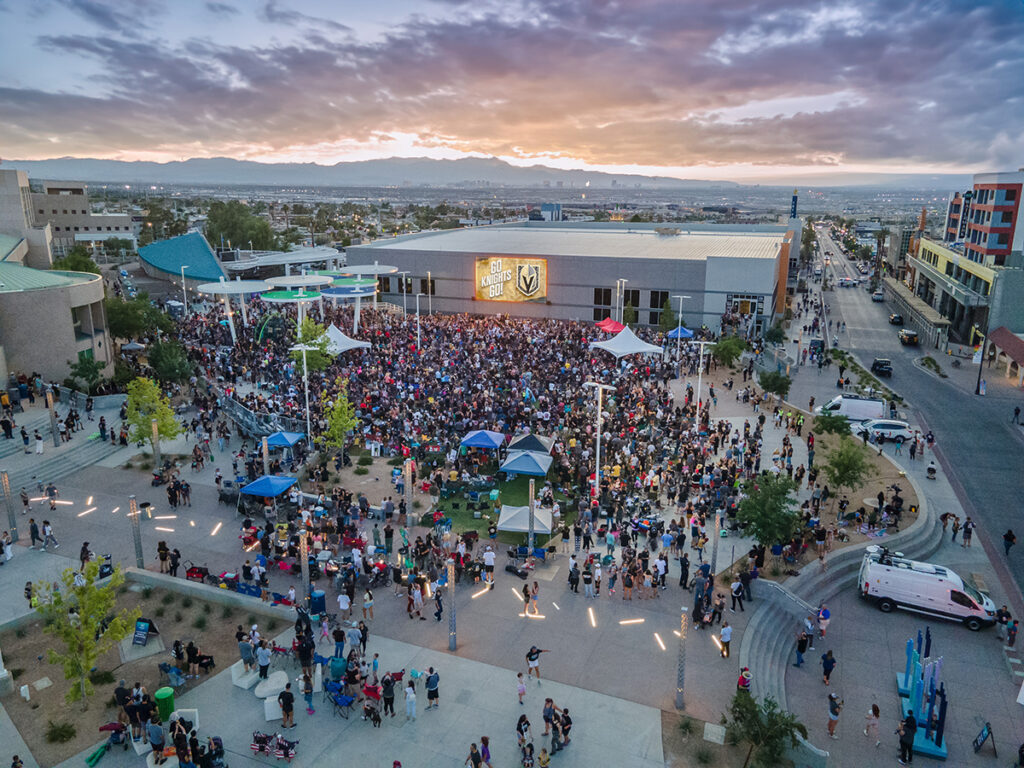
That growth has been supported by a dedicated parks and recreation property tax allocation first approved by voters in 1997. Today, that funding supports nearly 40 percent of the City’s parks and recreation budget and helps maintain 77 parks, more than 300 miles of trails, 105 athletic fields and recreation facilities across the City.
The upcoming Ballot Question No. 1 in the Primary Election on June 9 would continue that existing funding structure.
If the measure does not pass, taxes will not decrease. Instead, the funding would be redistributed elsewhere while Henderson parks and recreation would lose a significant portion of the budget that supports maintenance, staffing and operations.
Parks and Recreation Make It Possible for Business Growth
Henderson’s investment in parks and recreation has become part of the City’s economic advantage.
Companies looking to relocate or expand increasingly pay attention to quality of life when deciding where to invest. Employees want access to outdoor spaces, trails, youth sports and family-friendly neighborhoods. Businesses understand it is easier to recruit and retain workers in communities where people genuinely want to live.
That gives Henderson a competitive edge.
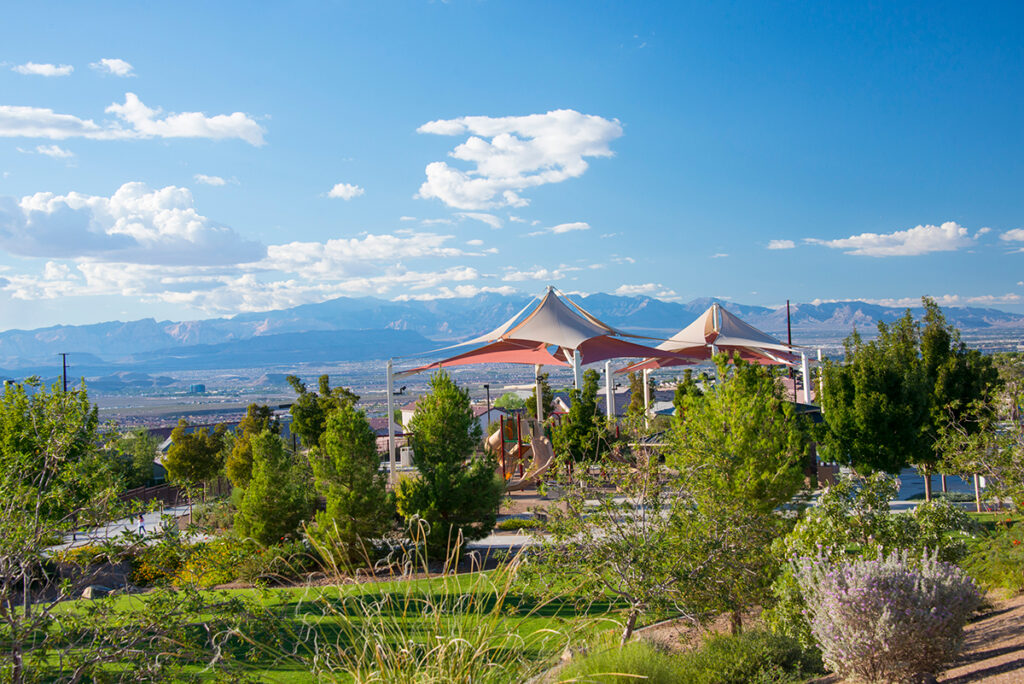
Developers building master-planned communities in Henderson know parks are not optional amenities. Families moving into new neighborhoods often ask about parks just as quickly as they ask about schools, restaurants and shopping centers.
Parks also help support property values and encourage additional investment nearby. Restaurants, retail and small businesses often grow alongside communities built around recreation and outdoor access.
Parks and Recreation Make It Possible for Workforce Retention
Quality-of-life amenities are becoming increasingly important for workforce recruitment and retention.
Trails, recreation centers and community parks help create the kind of environment businesses want for employees and families. Parks also serve residents at every stage of life, from youth sports and family activities to walking trails and recreation opportunities for seniors.
Today, approximately 85 percent of Henderson residents live within a 10-minute walk of a park, reflecting decades of planning focused on accessibility and community connection.
Those amenities help strengthen neighborhoods and contribute to Henderson’s reputation as one of the region’s most livable cities.
Parks and Recreation Make It Possible for Henderson’s Future
One reason Henderson’s parks system stands out is because the City has consistently maintained and improved it over time.
Older parks continue receiving upgrades and maintenance instead of being allowed to decline. That ongoing investment helps protect neighborhoods, preserve property values and maintain the City’s overall quality of life.
Without continued funding, maintaining that level of service would become more difficult over time.
Parks and recreation are no longer simply amenities. In Henderson, they are part of the City’s economic foundation — helping attract residents, support businesses and drive long-term growth.
As Henderson continues to grow, maintaining those investments will remain an important part of protecting the City’s future.