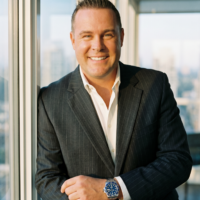
“Overall, we’re in a very fearful time, very uncertain, and people tend to get very concerned and uneasy [about investments] because it’s about their future,” said Brian Loy, CFA, CFP, Wealthspire Advisors. “Money is emotional. As much as we want to be rational beings and make smart business decisions, at the end of the day, it’s emotional.”
Where Investors Are Parking Their Money in an Uncertain Market
Interest rates are up, borrowers are paying more, savers are earning more and, within a matter of days, three banks failed.
In today’s investment market, people are worried about the usual: “Have I accumulated enough to retire comfortably? When can I retire and stay retired?” But right now they’re also asking, “Am I going to be okay? Is my money okay?” And that’s due to the fear and uncertainty spreading through financial markets.
Loy routinely points out to clients that money is FDIC protected in the bank, and with a brokerage it’s protected by the Securities Investor Protection Corporation (SIPC). Many ask, “But what do those coverages really mean?” FDIC insurance protects you up to a certain amount for your accounts. But reports show that up to 85 percent of accounts at Silicon Valley Bank were uninsured, and a recent study by Bankrate stated 40 percent of savers earn 1 percent or less on accounts.
“A lot of these people aren’t earning any interest so what good is it to have money in an FDIC insured bank if you’re losing to inflation and taxes? What are you being protected from?” said Loy.
Money in the bank is protected by FDIC. Money invested through a brokerage company is protected by SIPC. “But that’s not protection against market fluctuations,” said Loy. “In other words, you can have a bad investment in a fully insured brokerage account and not have any protection because you made a bad mistake. You may have an insured account but how are you protecting yourself against inflation or poor investment choices, identity theft or good old panic and fear and making bad decisions.”
That said, most of the money in banks looks safe right now, based on the actions of the government regulators that stepped in and backed up depositors and protected banks, said Loy. “But that’s safety of your investments. Are you on track? Do you have enough to retire? It’s about weathering these storms you hear about, recessionary fears.”
Since 2021, some $600 billion has left big banks and $150 billion has left small banks, with most of those funds heading into money market funds and Treasury Bills. “What that does to banks, it strains their business, their ability to lend money, which slows down growth of the economy and impacts their profitability,” said Loy. “Banks are there to take on deposits and then to lend it out again at a higher cost. If they have less money paid into deposits, they have less money to lend.”
“The collapse of the banks has definitely affected the market. More than anything I think it’s just created fear and uncertainty. With those regional-size banks as they continue to operate, people are worried about where they’re parking their money,” said Nick Gray, first vice president, Capital Markets, Marcus and Millichap. “So, you had a run on deposits with a lot of these banks even though, in my opinion, Silicon Valley Bank was set up to fail. They made a series of bad investments over a period of time. But any time you have a bank closure or bank failure it does send shock waves through the market, and it does create a little bit of panic which can spread like wildfire. I think the banking industry is sound at the moment. Obviously, interest rates are higher, so as long as you’re okay with the higher interest rate environment, most banks are healthy.”
This uncertainty in the banking industry has affected the stock market, and other investments, albeit the stock market has been fairly strong. “But what we’ve seen is that we have higher interest rates now, a lot of it because the Fed has been trying to head off inflation and increased interest rates over 4 percent,” said Loy. Higher interest rates are good for investors and savers, who can earn more, less good for borrowers who can’t borrow as much.
The high interest rates is what economists have been worried about, said Loy – whether the Fed will continue to tighten its grip, causing a longer and deeper recession.
The commercial real estate investment market is feeling the effects of uncertainty.
“People are on eggshells,” said Gray. “Waiting to hear the next Fed response, to see if they’re going to be raising interest rates. What that does for our business is, any time there’s uncertainty, it makes it very difficult to price the value of assets in the market. So if you own a piece of commercial real estate, a lot of that is driven by the interest rate that you can get for that specific property. With lower interest rates we see higher asset values and as interest rates increase, we’re seeing lower asset values.”
Which means potential buyers are stuck trying to determine value of purchases, what price makes sense when there’s fluctuation. And when one lending institution is a little shaky on providing financing, it makes buyers a little bit more hesitant, and sellers as well. “Because why would you potentially sell your asset at a discount if you didn’t have to?” said Gray.
Uncertain banking markets are also affecting bonds. “When that originally happened, Treasury Bonds actually dropped by 1 percent. When the news about the banks hit the public, interest rates fell by 1 percent immediately on the bond market. Since then, things have stabilized and interest rates have started to inch back up. The public believes that it’s contained for now and that it’s not systemic, which means that it gets bigger and bigger and bigger, like a ball rolling downhill,” said Randy Garcia, CEO, Investment Counsel Company. “So, the markets first went into a panic and there was a flight to safety out of the banks, and their depositors into U.S. Treasuries and other government agency fixed income investments.”
Since then, markets have stabilized and interest rates started to snap back. The stock market is higher today than it was just prior to the news of the banks, which Garcia said is counter intuitive – it would be expected that such heightened fear that the stock market would drop. It didn’t. It dropped on the first day, then corrected.
There is one bright spot for depositors as a result of the bank failures: “If money is leaving their bank, it creates stresses on their financial statement and we’re seeing that,” said Garcia. “Some banks are willing to pay clients more than 5 percent if they leave their money with the bank right now and don’t take it out.”
Safety
Safe is a relative term — so is bulletproof. Rather than any port in a storm, investors are looking for “safe” investment opportunities. But what is safe? Bank $100 today and leave it there, Loy points out, and it may safely remain $100 until it’s removed from the account. That doesn’t mean it’s weathered inflation, or that it’s still worth $100.
With the weight of the U.S. Government behind them, Treasury Bills are a popular option in an uncertain market. The 2 Year Treasury Bills (T Bills) are hitting rates like 4.5 percent. “We see a ton of people trying to buy T Bills because you have that U.S. Government guarantee behind them, so that’s a very safe investment,” said Gray.
T Bills are considered the safest investment worldwide, because only the U.S. Treasury has unlimited authority to tax the largest economy in the world, said Garcia.
“The other side, with commercial real estate, we have a lot of clients going out there and buying properties that are leased to investment grade tenants. So, for example you can be an investor that goes out there and buys a net lease transaction that’s leased to Home Depot. And given the strong corporate financials that they have backing the lease, they are sound investments. You’re just going to have to pay a premium for those types of assets,” said Gray.
Safe may depend on personal definition. Is it safety of principle? Purchasing power? Safety of lifestyle? “Or does safe mean I don’t want to see the value of my assets go up and down, which is what happens with the stock market, the way your 401K plan gets valued every day,” said Loy. “When people talk about what safe investments are, it’s having a portfolio of assets that will help you maintain lifestyle regardless of what happens in the economy. It’s [also] to be able to have multiple rivers of cash flow, so that your investments and cash flow are diversified by source and how it’s being taxed. Then you can maintain your lifestyle regardless of what happens with the economy or if tax policy is eventually going to shift.”
Bulletproof investments are those that have a high probability of keeping up with inflation after tax, after fees, said Garcia. Not make more than inflation, but keep up after taxes and fees.
Where Is Money Landing?
A lot of investment money today is landing in Treasury Bills. Not as much is in equities at the moment, said Gray, though money is still landing in commercial real estate. “It’s just what price are you willing to pay as an investor in order for you to make a decent enough return? The top place we’ve seen money go is really bonds and all high yield savings accounts, CDs. I’ve seen some CD rates above 5 percent, which if you keep $250,000 or more in there you basically have an FDIC insured bond at 5 percent,” he said.
Watching what’s going on with the banking industry, Loy’s noticed two things. First, there’s a lot of money drawn out of the stock market, possibly due to market uncertainty and to 2022 being a really tough year; people are just giving up and taking out money or profits. Second, he’s seen people pulling money from banks to put into alternatives like Treasury Bills.
“Higher interest rates have given us some great opportunities as investors because we can now invest with less risk,” said Loy. “The last decade almost forced us to take on more risk whether owning money in the stock market or putting money into real estate because interest rates were at zero. We got paid nothing to have money in savings accounts.”
Today with savings accounts interest rate CDs pay 4 and 5 percent. There are more options; not everything has to be in the stock market, or tied up in real estate. Investors can invest in Treasuries and CDs. “It’s been helpful because we can lower the risk of investing now. People hopefully are going to sleep a little better,” said Loy.
Wait and See?
There’s a fair amount of “wait and see” in today’s market. Buyers and banks may both hold off while interest rates are high. Others choose to do 1031 exchanges, setting themselves up for retirement. A 1031 exchange is an investment tool named for Section 1031 of the U.S. Internal Revenue Code, which allows taxpayers to defer recognition of capital gains and related tax liabilities on the exchange of certain types of properties.
Others are adopting “wait and see” stances because of softening demand for specific types of commercial real estate. One of those is the office market in general.
“Given the work from home environment, we’re seeing a lot of investors tend to be a lot more cautious on getting into those types of assets,” said Gray. Medical office is different—people still need to visit doctor’s and dentist offices—but office in general is currently a difficult place to put money in.
What to Do in an Uncertain Market
Keep cash on the sideline, Gray said. Opportunities for favorable transactions will hit the market whether that’s high yield bonds potentially in the future as the market shifts, or just keeping cash available for purchases of equities or commercial real estate.
“Cash is king right now,” said Gray. “In a shifting, potentially declining market you’re trying to put all the pieces together to make a perfect investment, it makes it difficult. Be conservative in your investing and have those conservative investments yield cash for you to keep so if there is a change in the market, a shift in the market, then you’re ready to pounce.”
As for what investors should steer clear of: “Those investments they don’t understand,” said Garcia. “It sounds so simple. Stay away from making decisions without full awareness. Are they speculating or are they investing? Can they quantify the risk they’re assuming?”
“In today’s market, because we’re seeing dramatic swings in interest rates week over week with the combination of bank failures; it makes it difficult to price a loan right now. So with these fluctuations you’re going to have one day where you could be 75 basis points above where you were the previous day,” said Gray. “So the advice I’m giving investors right now is, if we quote you today, the transaction is probably only good for 24 hours. If it makes sense today for you and your investing objectives, then pull the trigger. Because if you wait two days, that deal might not make sense for you anymore. Don’t wait.”