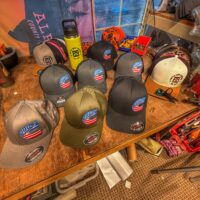
As the Raiders were planning their move from Oakland, California, to Las Vegas, there was intention to become a keystone in the community. For years, whether it was in their California homes of Los Angeles or Oakland, the Raiders were staples of the city. Memorabilia is a common sight in the cities with diehard fans ready to give it their all every game day.
While Nevada was a new state for the team, the same ethos of building a community in their home city was a key bullet point in the plan to set new roots, according to Marcel Reece, former senior vice president and chief of staff with the Raiders. (Editor’s Note: As of press time Reece is no longer with the Raiders organization.)
Philanthropic efforts were a pillar of the early years of the Raiders organization because of the desires of the late owner Al Davis. Prior to the team’s first game in Las Vegas, Davis’ son, Mark, pushed the same strong beliefs of community as his father, promising the city they were getting more than a football team.
“It was so vital for us to let Las Vegas know that we appreciate the city first, the wonderful city it is and the people that call it home,” Reece said.
It is that community foundation that the Raiders laid in both Los Angeles and Oakland that has helped grow them to a global brand, Reece said. It is why the Silver and Black Raiders emblems can be found across the globe.
“Our impact is not just local, it’s global,” he said.
The Raiders were not the first team in Las Vegas. They are also not the first team to embark on extensive, well-planned philanthropic endeavors to tighten the team to the community. However, being a team — and perhaps one of the most recognizable brands — in the NFL, the Raiders carry a different weight in a lot of ways.
But whether it is the Raiders, or the city’s first major professional sports team, the National Hockey League’s Vegas Golden Knights, or the city’s longest tenured team, the Las Vegas Aviators of Minor League Baseball, there are efforts galore from every team. The Aviators, through the Las Vegas Aviators Foundation, offer grants to assist educational programs and inner-city sports programs, among other initiatives.
“The Aviators franchise is dedicated to be a community partner and we need to give back to the city that we play in,” Aviators President/COO Don Logan said on a statement on the team’s community page. “We have provided the best in fun, family-oriented entertainment for the citizens of Southern Nevada since 1983 and Aviators baseball is a very important entity in this community.”
While sometimes a fundraiser or toy drive might seem like a publicity stunt, team executives suggest the community building initiatives are not a competition for brand superiority in the market.
“It’s important to stay out front and center,” said Kim Frank, president of the Golden Knights Foundation. “There is never enough people out there helping and it’s so awesome each team is out [in the community]. It’s not a competition, [we’re] just hoping to make the community a better place.”
The extension of Davis buying into the Las Vegas community came in the form of also buying the WNBA franchise in town, the Las Vegas Aces. The team also adheres to the philanthropic ethos and its effects have paid off.
“We feel passionately about supporting the Las Vegas community in any way we can,” said Carley Sisolak, director of marketing with the Aces. “When getting in the community and meeting new fans, we are looking to build long term trust and relationships. Knowing we love and support the community is vital to us, especially since we feel the love and support from them.
“We know it’s our responsibility to be good stewards in the community and give back to the city where we live. We want to return the energy and love off the court that Vegas gives us while we’re on court.”
The Aces gave back to Las Vegas in the biggest way possible in 2022, becoming the first professional franchise to win a league championship and have a parade down on Las Vegas Boulevard.
Sisolak said women’s sports are often overlooked and the gender inequality is evident in many ways, especially in financial constraints. For a women’s team to bring home the city’s first championship helped impact the community in a major way.
“It is important for young people, both boys and girls, to see strong women that are able to do great things and achieve their goals,” Sisolak said. “Although we may not get the initial notice or credit, we believe women deserve, we know we are working toward a larger goal and looking forward to getting female athletes the credit they deserve. Representation matters, and we are very aware of that.”
Out of Bounds
It is likely the teams in Las Vegas would still draw fans without community work, especially a team like the Raiders that plays in a league that can captivate almost an entire country multiple times a week.
Without the boots on the ground in the neighborhoods, however, a losing team might also lose much of its fan base support. Keeping a presence outside of a stadium can help foster those connections to keep them around for even when times are not so bright.
The Raiders’ efforts include a $500,000 pledge to eliminate school lunch and breakfast debt at qualifying school districts in Nevada.
Reece said it is the philanthropic work off the field that helps the Raiders separate themselves from many other organizations. The NFL, however, does have strong community efforts with plenty of league-wide initiatives.
“If it’s off the field, it’s genuine and authentic; off the field, it’s sustainable and not fair weathered,” Reece said. “It must be both, it can’t be either or, but both and. That’s why there are 31 NFL franchises and one Raiders organization.
The team will hold its Raiders 5K race March 4 for the Raiders Foundation that will highlight and support mental health. The team is also opening the Al Davis Leadership Academy near the Raiders and Aces facilities in Henderson.
Reece said the team’s efforts are helped tremendously by team President Sandra Douglass Morgan. Douglass Morgan is a local, which Reece said is vital to the team’s ability to better serve a community.
“[This] is a fantastic city and the great thing about us, embracing the community is part of our DNA,” he said. “[Sandra] is born and raised. She knows the community. We didn’t come in thinking we had all the answers. To support a community, you must listen. The intention can be there, but the execution has to be there too. It’s not just being in the community but being of the community.”
In a Time of Need
Philanthropic efforts were always going to be a piece of the Golden Knights’ framework heading into the first season of play in 2017. But just days prior to the franchise’s first regular season puck drop, tragedy hit Las Vegas.
One of the nation’s worst mass shootings took place on Oct. 1, 2017, at the Route 91 Festival and forever changed the city’s DNA. It also changed the way the Knights approached the organization’s relationship with the community.
Immediately, the team hit the ground and spent time with victims, helped with the massive blood drive and have continued their efforts around the memorialization of the event — including annual blood drives and pre-game ceremonies.
“It embedded us because it affected everyone,” said Frank. “We were so new; they weren’t sure who we were or who was on our team. We had a FanFest set up, but we came from different areas that tragedy has struck in the past, so we came together to help the community to heal. It’s not like we’re saviors, but we’re here to help. Being together with the community shows we’re human. It wasn’t for the cameras, it was the way to handle that situation.”
It helps, too, that the team started their time in the NHL with one of the most remarkable championship runs in professional sports. While the players ultimately fell a bit short of lifting the Stanley Cup, their efforts and galvanizing play fully united the city in a time of need and mourning.
Now, the Golden Knights continue its community work with a trio of focuses for the foundation:
- Education and youth sports
- Military and first responders
- Health and wellness
Big one-night events help raise money, as well, including a Nov. 23, 2022, Hockey Fights Cancer Knight game that generated more than $100,000 toward the cause. In the past year, the foundation has also collected more than 2,000 pounds of canned goods for Three Square Food Bank. According to the foundation’s 2021 report, it donated $1.7 million during the year, including $640,000 through the team’s 51/49 raffle at every home game, more than $850,000 through in-game auctions and more than $250,000 during the third annual Vegas Golden Knights Golf Classic.
Balancing Philanthropy and Publicity
Frank said Golden Knights’ players and staff are out in the community multiple times per week, and even more during the holidays to help show the city they are always around. Sometimes, the cameras are present, but other times, it is without fanfare.
Oftentimes, Frank said the publicity just helps further share the idea that the Golden Knights are teammates with their neighbors, not just their linemates.
“[The community is] cheering for us on the ice, but we’re for them off the ice,” she said. “The players are so real and down to earth, caring people. Our job is to show that and sometimes we have to say, ‘Why don’t you tell us you’re doing it?’ It’s because they don’t want the hoopla. But that’s been the fun part of this hockey team, the community is so important to us.”
Basketball is a platform, as are all the sports, that people turn to for entertainment. But that entertainment fame helps give those athletes and their organization a voice the community will listen to, Sisolak said.
“We always want to be genuine and organic in everything we do and that’s at the forefront of our planning and outreach,” Sisolak said. “For every event or outreach opportunity that is seen, there are so many more behind the scenes.”
Player Buy-in
Sisolak said, like Reece, the Aces mentality starts at the top with Davis, and it trickles down through business leadership to players.
“Everyone at the Aces is passionate about getting out into the community and supporting, which makes it easier, but also more genuine,” she said. “Luckily, getting players to buy in here hasn’t been tough, we were pretty lucky. We work hard to not force things and align our efforts with causes that players are passionate about so there is buy-in and room to grow.”
Reece is a 10-year NFL veteran himself, and he laughed when asked if getting players to buy-in to community work can be hard at times. While some might be stubborn at times, there is a realization for many of the players that life and their career in sports is bigger than just the name on the back of their jersey.
“Everyone is different, but it is easy to get players to buy in,” he said. “It’s important to be involved in the community and you understand that it’s bigger than a name on the back of the jersey, it’s about the shield on the side of the helmet and when you bring your name with it, it becomes legacy. You have to embrace that.”