Technology is advancing at the speed of light as newly developed technologies lead to other discoveries, and problems inherent in discoveries lead to development of technology-based solutions. There’s a bewildering array of new out there, all of it with the potential to help or harm, depending on its use, and the humans using it.
Technology Powers Business
“Technology is designed to be a productivity multiplier,” said Nathan Whittacre, CEO, Stimulus Technologies.
Where once engineers worked with pen and paper on a drafting table, for years they’ve designed on AutoCAD design software. Calculations are automatic, collaborations can be global.
This isn’t news. But, technologies like AI (artificial intelligence) are making news daily. “Technology is a force multiplier and as we’re moving into AI, a lot of businesses are very interested in it and wanting to do more work with less human interaction,” said Whittacre. This allows for less human time spent on routine, mundane and/or repetitive tasks, and more time spent collaborating and creating. “Technology does just that. It allows for more collaboration, more speed to deliver services to clients, better interactions with customers, and automation around things that are repetitive tasks that their employees don’t want to do every day.”
Technologies can make companies perform better, producing better outcomes for themselves and their clients. The more tasks can be automated, the more employees can focus on doing their best work.
“Technology plays an integral role in running a business, even if it’s just running financials or security. A lot of people are adding more security and what we’re finding with our SIM (security information management) is, a lot of smaller companies, not really small but smaller than mid-size companies, are looking more to security monitoring,” said Debbie Banko, CEO, Link Technologies.
Cybersecurity allows businesses a level of safety when utilizing technology. Technology allows businesses to focus on the business itself and not on the basic steps. Creativity and thought behind what the outcome of a project should be and the strategy to get there is the human side of the equation. Technology builds the way for those humans to collaborate.
The best tech for a business differs by industry. However, there’s a baseline in tech that needs to exist, according to Whittacre. But from there, the right tech depends on the type of business. Retail, restaurants and casinos are more focused on point-of-sale technology, face to face customer interactions and credit card processing systems. In contrast, a CPA firm does most of its work behind the scenes and needs to focus on protecting client data, and a mining company is scoping out geological data and equipment maintenance. Another example is that local governments load applications for licensing various businesses in their jurisdiction.
“[Technology] is highly industry specific,” said Piotr Tomasik, cofounder/president, TensorWave. “In the mining industry AI is used for predictive maintenance of heavy machinery and geological data analysis, which is wholly different than something like biotech. Or, in the healthcare sector, they can employ AI to diagnose patients quicker and get them into triage, analyze medical imaging very quickly so doctors can get through the queue faster.”
Businesses are using AI for everything from instant complex answers to questions, to adoption of the technology on the Vegas Strip. “They basically tested out casino hosts,” said Tomasik. “When a guest checks in, they get a custom AI assigned to them, seeing to what needs they have during their visit. It’s one of the more exciting uses of AI.” TensorWave creates the tools that power the AI tools—they’re an AI infrastructure company.
“Every need is a little bit different for every type of business,” said Whittacre. “We help companies of different sizes to right-size their technology to chart their vision for their businesses by implementing the right technologies.”
Powering the Technology
Nevada Tech Hub is a consortium of government, industry, education and nonprofit organizations aligned toward a common goal: leverage Nevada’s rich natural resources and develop a full-spectrum lithium economy within Nevada. It’s been up and running since mid-year 2023 after the notice that U.S. Economic Development Administration (EDA) was entertaining proposals from different entities across the country representing different regions to be designated as tech hubs. The EDA identified 10 key technology focus areas entities could apply for; Nevada Tech Hub fit the advanced energy category, especially as the announcement specifically mentioned lithium batteries.
Nevada already had Tesla and Panasonic working on batteries, Dragonfly Energy, a battery manufacturer, is one of several companies benefiting from mining in Silver Peak and new lithium mines opening. Companies like American Battery Technology Company received federal grants to develop recycling processes and lithium extraction methods. Redwood Materials developed recycling processes, and local startups are building batteries for uses other than electric vehicles.
After receiving tech hub designation and federal funding, Nevada Tech Hub began working with a Nevada lithium loop—the quest to make Nevada a global player in lithium from the mining to the distribution of batteries.
Lithium batteries power technology and technology powers the creation of the batteries. The manufacturing and recycling of lithium batteries is spurring more technological advances.
New tech development creates problems. Most lithium extraction requires pumping brine to the surface into evaporative ponds. When the water evaporates, the remaining material is scooped up and processed. “Since a lot of lithium brine is found in desert areas, this is problematic in that groundwater levels are being diminished. Even though it’s brine, it’s still problematic,” said Richard Bartholet, regional innovation officer, Nevada Tech Hub, UNR College of Business. So there are companies creating new technologies to find ways to extract lithium from brine.
“Some of the mining companies are working on ways to extract lithium from the clays,” said Bartholet. “A lot of lithium deposits in Australia and China are hard rock material. In Nevada, there’s significant lithium deposits in clay sediments.” To pull the sediment out of the ground requires a different system; American Battery Technology Company is working on that.
Batteries being manufactured are changing from traditional lithium manganese cobalt oxides and new batteries are coming as a result of innovations from companies like GM. Lyten has proposed a gigafactory in Reno to produce lithium-sulfur batteries. Another company is creating proprietary technology to grind up used batteries and extract the cobalt and manganese from them, said Bartholet. Redwood Materials has determined batteries considered at the end of their life cycle are basically at the end of their cycle for powering EV—put them to work for stationary storage and they can keep working for much longer. Technology is powering and recycling technology.
The Shiny New Frontier
AI and cloud computing are both trending. Link Technologies is a tech recruiter and is seeing demand for the right people for the right technology by industry. Businesses are looking for generative AI, automation skills and a lot of network skills. Business owners are upgrading technologies, upgrading skills and making their businesses safer. They’re implementing AI in their companies and learning what it is, how to use it, and why.
Cox Business, a division of Cox Communications, provides managed services, voice and collaboration tech like Teams and RingCentral, a cloud-based phone system, and other network solutions. “We want to make sure we’re providing [clients] with the latest technology to keep their businesses ahead of the curve,” said Janet Uthman, VP/market leader, Cox Las Vegas. “By integrating artificial intelligence into the cloud offerings, businesses can automate routine tasks to help them analyze data in real time to make informed decisions.” Cox Media Group, which sells ad solutions across the Valley, uses AI-driven analytics to identify campaign trends and optimize performance, utilizing the same technology available to their customers.
“There’s this vision that AI is going to take care of everything inside a business, and it’s not quite there yet, and I don’t think it will be there immediately,” said Whittacre. Some industries are adopting it faster than others. Healthcare systems can use AI to read radiology scans and diagnose outcomes. It doesn’t replace radiologists, not yet. It’s just a tool to help out in specific areas.
That’s one side. The flip side is the bad actors who instantly adopted AI. Currently they’re using AI to up their games of phishing and social engineering, getting employees to click on links they wouldn’t if they didn’t think they could trust the sender, or to do things they wouldn’t if they didn’t believe communications were legit.
One of the scary things is, AI allows bad actors to automate their attacks. They can set their attack to happen at 2 a.m. on a Sunday morning. Which leads to the need to incorporate AI into the security tools used to detect those types of attacks. Responses need to be faster, protection needs to be at higher levels.
Keeping it Safe
On the topic of keeping systems safe, Whittacre said Stimulus Technology is happy to talk about AI and cybersecurity. “But there are basic things that have to happen from an IT perspective first.” Like keeping hardware and software up to date. Whittacre recommends inventorying technology and managing the life cycle of hardware and software.
For example, Microsoft Windows 10 tech support ends October 2025, meaning no more security updates for devices. Which puts those devices at risk. “Along the same lines, all your software has to be patched relentlessly, keeping your systems up to date whether it’s having the latest software update on your cell phone all the way up to your servers,” said Whittacre. “Applications patched and updated on a regular basis to protect against hackers and to ensure you’re getting the latest support.”
There’s a lot of effort and focus today on identity protection, as in access control, making certain passwords are strong, multifactor authentication in place on all accounts. Email is the entry point for most hackers, so a strong security system along with monitoring–-account takeover protection–-can detect if somebody’s gotten access through an email account and is trying to do nefarious things.
Other familiar steps include up-to-date virus protection software, and expert backup systems so whether it’s hardware failure, systems failure, or a hack, the system can be restored as quickly as possible. Companies like Cox’s RapidScale provide cybersecurity and scalable solutions like disaster recovery services.
“The more we come up with more technologies, the more the bad actors break into those technologies, and they don’t care if you’re small, medium, or large. We had a [client] call the other day and say we lost everything, can you come recuperate?” said Banko. “When they told me what kind of hit they had, we called the FBI. It was pretty bad. It was a big, known bad actor. They’d been trying for a long time and broke into a small company and just destroyed their data.”
In late August a cyberattack took down state of Nevada offices for two days, making some websites and phone lines unavailable. Two weeks after the ransomware-based attack state offices still had limited capability.
The last step in security is human—training everybody in the business on the use of the technology and how to protect the system.
Keeping it Legal
There are best practices for using technology, and best practices for using it properly. Federal and state laws regulate the use of technology, and those regulations are often industry specific. Healthcare, for example, has to be HIPAA compliant. Businesses that accept credit cards need to meet requirements to accept and process data safely to avoid exposing financial information.
“The state of Nevada has some very strict protection laws about personally identifiable information,” said Whittacre. Nevada was one of the leading states to put PIIA – the Personally Identifiable Information Act – in place. New requirements for defense contractors are currently going into place. “If you deal with financial data, there’s federal regulations and other types of safeguard rules recently implemented all the way from CPA firms to car dealerships that work with financial data. They’re treated like banks now, so there’s definitely a regulatory environment and it’s increasing every year and it’s both state and federal laws that are covering that type of regulation,” commented Whittacre.
There’s also the TAKE IT DOWN Act from Congress which generally prohibits the nonconsensual online publication of intimate visual depictions of individuals, both authentic and computer-generated. “That’s a good one to start to discourage the misuse of AI,” said Tomasik.
Tech support providers have solutions for protecting client data and staying compliant with regulations. RapidScale is a Cox business company. “[RapidScale] offers solutions for protecting customer data such as built in security protocols and encryption and compliance support to help businesses meet federal and industry standards, like HIPAA in healthcare, or the payment card industry has their own standards,” said Uthman. “Making sure businesses are aligned with regulations and a security operations center helps businesses respond to cybersecurity threats.”
With more technology available to bad actors, protecting sensitive data is more important today than ever before. “The most important thing is to make sure companies are not submitting confidential or sensitive information to LLMs [Large Language Model] like Chat GPT without a licensed subscription,” said Tomasik. Employees need to be trained, and vendors need to be vetted if they use AI tools to make certain they keep client data segmented so AI models aren’t trained using a company’s private information.
Keeping it Real
What’s the best way for businesses to utilize the newest technologies when the landscape is changing daily at the speed of light? Staying aware, staying informed, being the expert in their own field and working with experts in the tech world.
“One of the things companies need to do as part of best practices is when you go to something new, make sure you’ve hired the right people and make sure you bring your subject matter expert as a consultant who can teach your people how to maintain it,” said Banko.
“One of the things a business owner should be looking at is what new technologies are available in their industry,” said Whittacre. “There’s always new technologies coming out. Business owners should be aware of what’s going on and discovering best practices, but not just buying a solution to find a problem.”
“Key for businesses is the smallest technology footprint,” said Banko. “Only buy what you need. Because the bigger the technology footprint, the more it’s going to cost you to upgrade each and every thing. Make sure you’re only buying what you need. Don’t just buy the new thing because it sounds great.”
“Adopting a modular approach, like using flexible modular tech stacks, allows easy integration of new tools,” said Tomasik. This makes it possible to switch out different models as they become efficient or better for a specific industry. It’s important there is continuous training of employees using platforms and workshops to stay updated, then partnering with experts and collaborating with specialized providers that can guide businesses in reducing the learning burden. It’s also a good idea to try pilot programs rather than taking a deep dive into brand new tech.
“Find a provider who can meet your specific company needs now and scale with you as you grow,” said Uthman. Find a provider that can respond fast to system disruptions, has cloud computing on-demand, allows users to act fast without managing the physical infrastructure so solutions offer flexibility, scalability, and economies of scale. “Bottom line is making sure you’re staying on top of technology and have the latest and greatest resources out there, and first and foremost making secure the back office information and maintaining customer privacy,” she continued
In the end, best practices don’t just mean keeping everything and everyone safe. It means letting the human experts do the creative, innovative, industry-specific stuff, and letting technology handle mundane, repetitive and routine in the background.
“What differentiates us as humans is creativity, the stories we tell, that’s part of it,” said Whittacre. “I’ve talked about stories I’ve experienced with technology and clients over the 30 years I’ve been doing it and you’re never going to get that with AI. You might get stories that aren’t real, but I think today when so much is generated content by AI or people are putting out AI generated stories, those [human] stories make a difference. [Stimulus Technology] does marketing and I tell bad dad jokes on our YouTube channel. They’re like 30 second jokes, and those get the best views. Dad-style tech jokes. They get the most views because they’re the most versatile and corny and sometimes the differentiator from all the other content out there,” he said.
Human to human, via technology.
The Transformative Power of Education in Workforce Development
Nevada State University believes in the transformative power of education and prides itself on being an accessible educational resource in Southern Nevada.
The workforce development program at Nevada State University is a comprehensive learning experience designed to provide education, training, and skills development to members of the Southern Nevada community. Its range of programs includes the Scorpion STEAM Academy (SSA) for middle-school students, the Nevada State Cybersecurity program, and leadership development through the Nevada State Leadership Academy (NSLA).
Tom Nicholas, Director of Workforce Development, has seen firsthand how our programs provide participants with a well-rounded approach to advance in the workplace. He believes the effectiveness of each program highlights Nevada State’s commitment to serve and educate the community by providing multiple educational avenues to learn and grow.
According to Nicholas, “The workforce development program is more than another education course; it is a holistic approach to career development. Our role is to provide students with the tools they need to succeed in today’s dynamic job market both during and after they complete the program.”
Nevada State Leadership Academy (NSLA): Supervisor Bootcamp and the Leadership Academy
NSLA is composed of two micro-credential programs: The Supervisor Bootcamp and the Leadership Academy. Both programs utilize an employer-driven model of curriculum development and allow participants to add several specialty leadership areas to tailor the experience to their needs and interests, especially for those without higher education degrees. According to the US Census, only 26.1% of Nevada’s population ages 25 and older have earned a bachelor’s degree or higher. 
For many seeking to advance their skill set, different obstacles can contribute for those unable to commit the time to earning an advanced degree. Nicholas highlights the importance of continuous learning for career advancement and sees his program as an alternative for those seeking to advance. “Not everyone can commit to several years of traditional education, but by participating in these workforce development programs, individuals can build their current skills and make themselves a more competitive candidate for advancing in their company.”
This fall, the program welcomed its student cohort and enrollment is ongoing for individual courses.
Scorpion STEAM Academy (SSA): A Summer Exploration
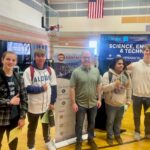
Scorpion STEAM Academy is not another summer camp; it is an immersive experience that takes place on Nevada State’s campus. Students explore the world of science, technology, engineering, arts, and mathematics (STEAM) in a university setting. With hands-on activities that expose students to different career opportunities in STEAM.

During the SSA’s week-long programs, students interact with leading industry professionals in STEAM fields, who bring their knowledge and career experience to different in-class projects and lessons. The academy has served over 600 student participants.
AI Academy
AI is not the future — it’s the now. Whether you’re in government, healthcare, education, or business, artificial intelligence is reshaping how work gets done. The AI Academy at Nevada State University is designed to equip professionals across sectors with practical, hands-on AI skills — no coding or technical background required.
In just 2 weeks, you’ll gain digital fluency, master time-saving AI tools, and complete a capstone project tailored to your field.
This program is ideal for:
- Public servants and government leaders
- Business professionals and entrepreneurs
- Anyone ready to future-proof their career with AI
No prior AI or tech experience is needed — just curiosity and a desire to innovate.
Human Resources
Equipping professionals with essential skills in recruitment, employee relations, and compliance.
Career Training Fully Online Programs
Nevada State University, in partnership with ed2go, offers online open enrollment programs designed to provide the skills necessary to acquire professional level positions for many in-demand occupations.

Our programs are designed by a team of professionals from each respective field, providing you with effective web-based learning programs. Instructors/mentors are actively involved in your online learning experience, responding to any questions or concerns, as well as encouraging and motivating you to succeed.
Nevada State University’s workforce development programs are more than educational experiences; they open doors to new opportunities for people seeking to advance in their respective careers. “By participating in our programs, you’re not only gaining knowledge; you’re investing in your future and the future of our community,” Nicholas said.
To apply or learn more about Nevada State University’s workforce development programs, contact us:Email: workforce@nevadastate.edu
Phone: 702.992.2491
Website: nevadastate.edu/workforcedevelopment